 Physics at Virginia
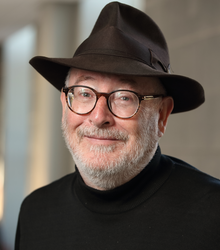
Craig Dukes
Ph.D., 1984, Michigan
Professor
Experimental High Energy Physics
Research Interests
Professor Dukes’ research is in experimental Elementary Particle Physics where he has worked on experiments at several major accelerator laboratories in the world, and held visiting positions at: Brookhaven National Laboratory, CERN Lab in Geneva, Switzerland, Lawrence Berkeley National Laboratory, and the SSC. He is currently the head of the Frontier Physics Group at the University of Virginia.
Professor Dukes’ current research lies in two experimental areas: elucidating the source of the slight asymmetry between matter and antimatter in the universe, or CP violation; and discovering dark matter. CP violation is thought to be responsible for the nearly absolute asymmetry between matter and antimatter in the universe, indeed why there is any matter at all in the universe. By far the largest contribution to the mass of the universe is dark matter, which we know must exist from its gravitational interactions, but of which we know little else.
Professor Dukes is presently engaged in two Fermilab flagship experiments, NOvA and Mu2e, one Stanford Linear Accelerator Center (SLAC) experiment, LDMX, and an experiment design to search for hidden chambers in the Great Pyramid (Khufu), EGP. NOvA, a long-baseline neutrino experiment, among other things, will search for matter-antimatter asymmetries in neutrinos. The NOvA detector, one the largest ever built, is sited in woods of northern Minnesota. It is currently taking data and publishing seminall physics results. It will remain one of the leading neutrino experiments in the world until well into this decade. Dukes’ group built the NOvA power distribution system, designed the detector control & monitoring system, and built and installed the Block Instrumentation System. Dukes long served as co-head of the NOvA Exotics Group, which among other things is performing a search for magnetic monopoles with unprecedented sensitivity. He also is the Institutional Board representative for the UVA Group.
Mu2e will search for new physics through lepton-number violation: that is, muons decaying into electrons without any associated neutrinos. This is an example of a relatively low energy experiment probing energy scales unattainable by any existing or proposed accelerator-based experiment. Dukes serves as head of one of the three detector groups, the Cosmic Ray Veto group, the fabrication of which is the largest undertaking ever by the High Energy Physics group at UVA. Dukes also serves as head of the Mu2e Institutional Board.
Finally, Dukes is collaborating with a small team to search for hidden chambers in the Great Pyramid of Khufu. Using the novel detector technology his group developed for the Mu2e Cosmic Ray Veto detector, they have designed a detector that should be able to resolve chambers with an order of magnitude greater resolution than that of the 2017 search by a French-Japanese team.
Selected Publications
Supernova neutrino detection in NOvA, with M.A. Acero et al. (NOvA Collaboration), J. Cosmol. Astropart. Phys., 2020, 10, 014 (2020).
Search for multi-messenger signals in NOvA coincident with LIGO/Virgo detections, with M.A. Acero et al. (NOvA Collaboration), Phys. Rev. D101, 112006 (2020).
A High Efficiency Photon Veto for the Light Dark Matter eXperiment, with T. Akesson et al. (LDMX Collaboration), J. High Energy Phys. 2020, 3 (2020).
First Measurement of Neutrino Oscillation Parameters using Neutrinos and Antineutrinos by NOvA, with M.A. Acero et al. (NOvA Collaboration), Phys. Rev. Lett. 123}, 151803 (2019).
Observation of seasonal variation of atmospheric multiple-muon events in the NOvA Near Detector, with M.A. Acero et al. (NOvA Collaboration), Phys. Rev. D 99, 122004 (2019).
News Items
Departmental Committees
Colloquia and Special Lectures Committee (Member)
APS, AAAS Fellowship & Other External Recognitions Committee (Member)
Long Range Planning Committee (Member)